
From 1857 to today, a family history of craft, art and research.
Germany’s oldest stained glass workshop was founded in the mid-19th century in Linnich in the Rhineland by the country doctor Dr Heinrich Oidtmann. The confirmed founding date is 6 December 1857, established by a documented invoice for painted glass to the Linnich master glazier Kobecke. Earlier sources, though not clearly verified, point to an even older origin.
For six generations now, Glasmalerei Dr. H. Oidtmann has been dedicated to the design, restoration and study of artistic glazing. Over the decades, traditional craftsmanship grew into a company that preserves historic stained glass while helping to shape contemporary glass design.
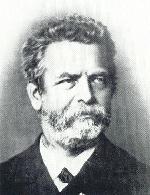
While still studying chemistry and medicine, Dr Heinrich Oidtmann I engaged deeply with the history and technique of stained glass. He was especially fascinated by the interplay of craft, material and light.
Alongside traditional musive stained glass, he turned early to developing new technical processes. In the early 1860s he succeeded in transferring image templates onto glass using lithography, producing stained glass in series. The more affordable glass images made possible by this glass stone printing brought the company worldwide renown.
This commercial success led to rapid growth. Glasswork from Linnich was exported internationally, including to America, Africa and the Philippines. With the opening of branches in Brussels (1885) and Berlin (1886), Glasmalerei Dr. H. Oidtmann became one of the most important stained glass companies of its time.
By the change of generation in 1890, the company employed around 100 people and had received numerous awards for its technical innovations and the high quality of its work.
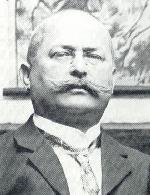
Under Dr Heinrich Oidtmann II, the second generation developed the company steadily further. For reasons of quality, mechanical glass stone printing was abandoned in favour of the handcrafted execution of historic copies and musive stained glass in a historicist style.
Alongside practical work, Heinrich Oidtmann II devoted himself intensively to researching the technique and history of stained glass. His 1912 work “Die Rheinischen Glasmalereien vom 12. bis 16. Jahrhundert” is still regarded today as a significant contribution to stained glass scholarship.
The art historian Dr Hans Kisky wrote of him in 1959 that hardly any scholar in the Rhineland had ever achieved a comparable knowledge of stained glass.
With this combination of craftsmanship and scholarly engagement, Glasmalerei Dr. H. Oidtmann shaped the development of stained glass far beyond the region.
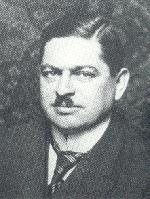
The architect Heinrich Oidtmann III took over the company in 1912. With his architectural understanding, he shaped the development of the workshop in a time of great economic and social upheaval.
By expanding international relationships, particularly with America, he managed to guide the company safely through the difficult years of the First World War and the Great Depression.
At the same time, Heinrich Oidtmann III continued his father’s scholarly work. In 1928 he published the second volume on the history of Rhenish stained glass, carrying forward the family’s documentary and art-historical research.
Under his leadership, Glasmalerei Dr. H. Oidtmann increasingly combined craft tradition with architectural and scholarly ambition.

After the early death of her husband Heinrich Oidtmann III, Ludovica Oidtmann took over the management of the stained glass workshop. In a time of political and economic uncertainty, she led the company with great responsibility and foresight.
Exchange with contemporary artists and designers was especially important to her. Under her leadership the workshop remained open to new artistic developments and held its ground through the difficult years of the Great Depression and National Socialism.
That Glasmalerei Dr. H. Oidtmann survived this period as a family business is closely bound up with her personal commitment and her remarkable strength.
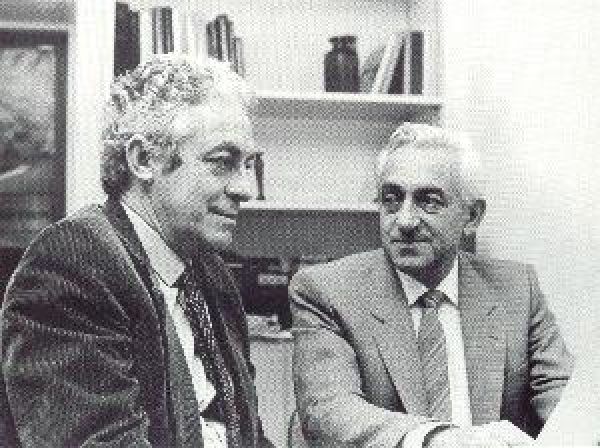
After the end of the Second World War, the brothers Friedrich and Ludovikus Oidtmann took over the badly damaged family business in 1945. During reconstruction they seized the chance for a creative and technical new beginning.
The workshop increasingly oriented itself towards modern developments in stained glass. Close exchange with artists in Germany and abroad, and dialogue with a young generation of Rhenish glass painters, shaped this period lastingly.
By extending its craft repertoire to include mosaic and concrete glazing, Glasmalerei Oidtmann developed into one of the leading workshops for modern glass design in Germany. Numerous awards document this development, among them the Studio Work Prize of the Aachen Chamber of Crafts, the Linnicher Groschen, participation in Exempla 77 in Munich, and the award of the Knight’s Cross of the Icelandic Order of the Falcon in 2004.
Together with their sons Heinrich and Stefan, Friedrich and Ludovikus Oidtmann also worked to preserve the history of stained glass. Through the donation of a significant collection, they played a major part in founding the German Stained Glass Museum in Linnich in 1997.
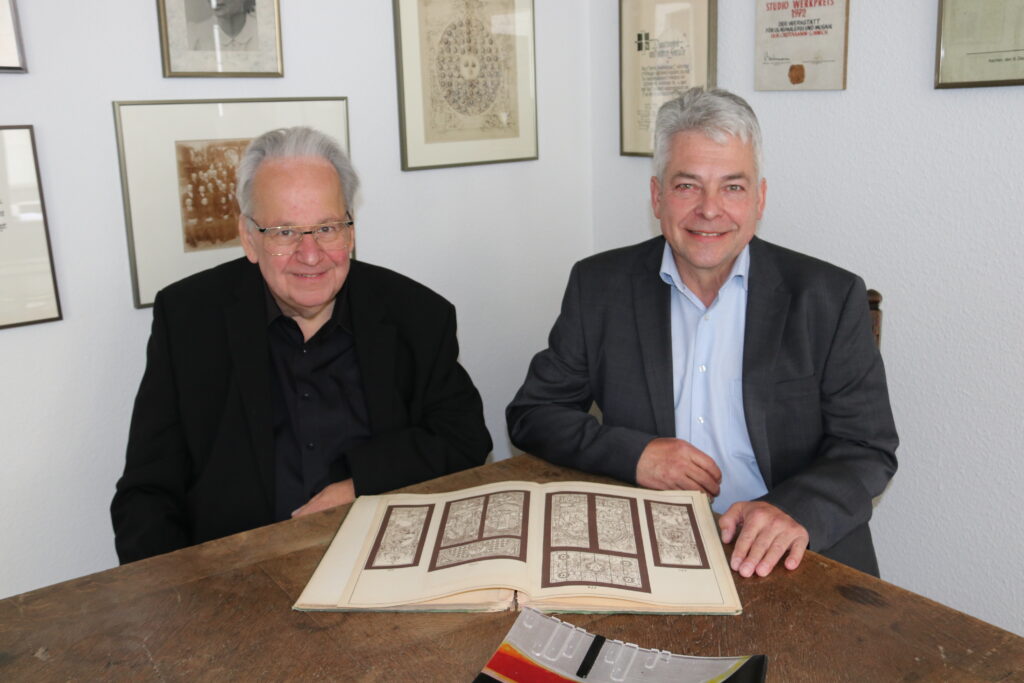
Since 1999, Heinrich and Dr.-Ing. Stefan Oidtmann have successfully carried on the legacy of their fathers.
Heinrich Oidtmann trained as a journeyman and master art glazier at the glass college in Hadamar. Before joining the family business in 1983, he worked for several years in another workshop.
Dr.-Ing. Stefan Oidtmann studied architecture at TU Braunschweig and RWTH Aachen. Alongside his studies, he began training as a glass painter in the family business in 1981.
From 1989 to 1996 he was project leader in a joint research project on the effectiveness of existing protective glazing and the development and testing of new protective glazing constructions, commissioned by the Ministry for Research and Development. As part of this project he wrote his 1994 dissertation on protective glazing as an effective measure against corrosion on valuable stained glass. Thanks to his many years of intensive experience with protective glazing constructions and climate measurements, he is frequently consulted as an expert witness.
He was also a publicly appointed and sworn expert for the glass and porcelain painting trade for 24 years.
Heinrich and Dr Stefan Oidtmann see it as an important task to maintain contact with contemporary artists, to translate their designs into glass in the best possible way, and to remain open to experiment. They are also deeply committed to carrying out the restoration of historic stained glass in cooperation with the relevant conservation authorities: with the greatest care, sound expertise and according to the latest scholarly findings.

Today Glasmalerei Dr. H. Oidtmann continues to be run by Heinrich and Dr Stefan Oidtmann. At the same time, the next generation and experienced staff are already shaping the company’s further development.
With Michael Oidtmann, master glazier with a Bachelor Professional qualification, the family tradition of stained glass grows into the next, the sixth generation.
As a further managing director, Michael Oidtmann accompanies the present and future tasks of the workshop: from the restoration of historic glazing to the realisation of contemporary projects, and in particular the remediation of asbestos-contaminated glazing. He is supported in this by workshop manager Lars Pick.
Through close exchange between long experience, craftsmanship and new perspectives, the company continues to develop.
 DE
DE EN
EN